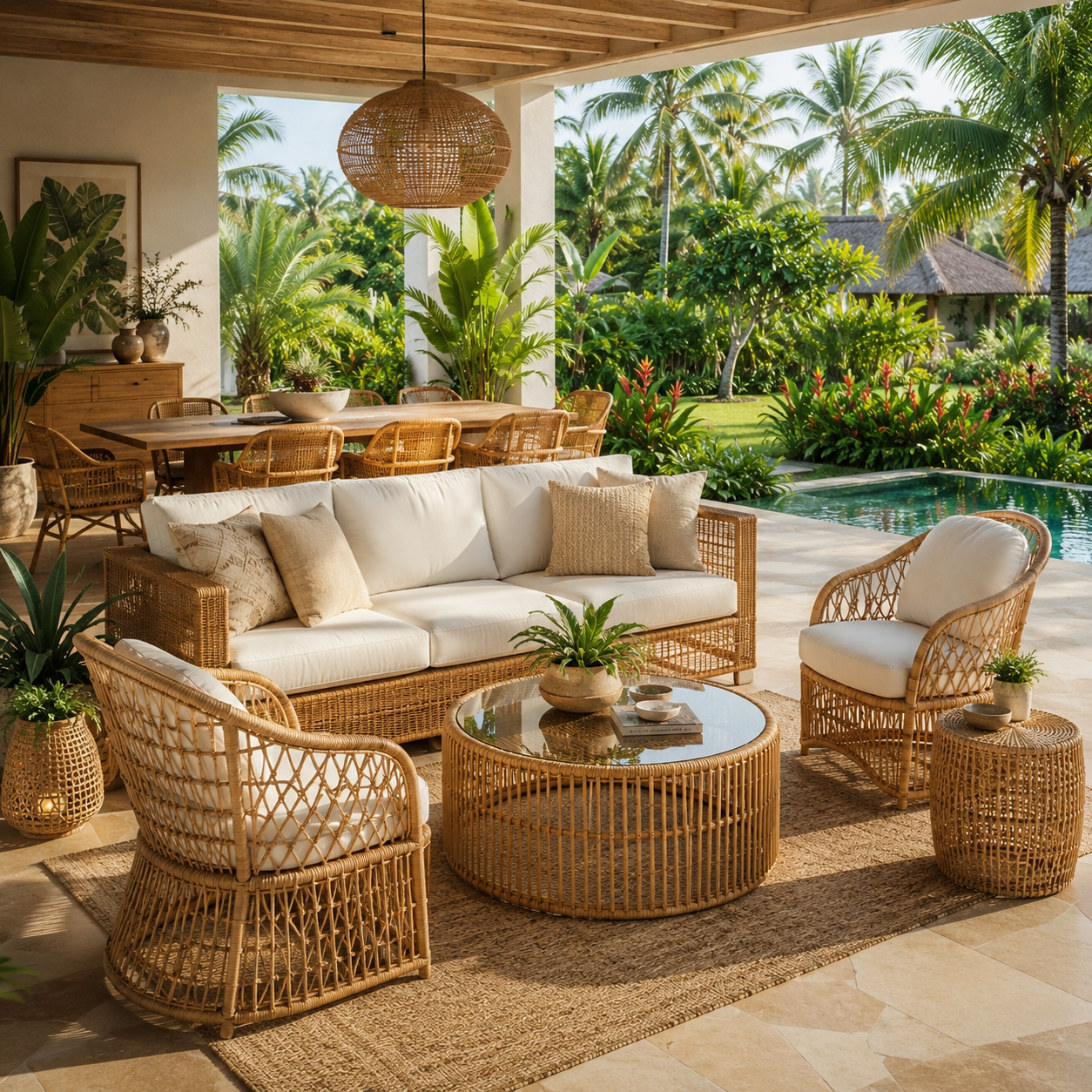
Discover the intricate process behind the creation of world-class rattan furniture. From the deep forests of Indonesia to the skilled hands of artisans in Cirebon, this is a story of tradition, craftsmanship, and timeless beauty.
The Heritage of Indonesian Rattan
Indonesia supplies approximately 80% of the world's raw rattan, making it the global epicenter of this versatile material. Among the many regions famous for their craftsmanship, Rattan Cirebon stands out as a beacon of quality and innovation. For decades, the artisans in this coastal city have passed down weaving techniques from generation to generation, ensuring that every chair, table, and sofa produced is not just a piece of furniture, but a work of art.
The journey of rattan furniture begins in the tropical rainforests of Sumatra, Kalimantan, and Sulawesi. Unlike timber, rattan is a vine that grows rapidly, making it a highly sustainable resource. Once harvested, the raw material undergoes a rigorous process of curing, cleaning, and grading before it ever reaches the workshop floor.
The Crafting Process: From Vine to Masterpiece
Creating high-quality rattan furniture is a labor-intensive process that resists full automation. This is where the human touch becomes irreplaceable. The process generally involves several key stages:
1. Framing
The skeleton of the furniture is created using thick, durable rattan poles. These poles are steamed to make them pliable, allowing craftsmen to bend and shape them into elegant curves and sturdy structures. Once dried, they hold their shape permanently, providing a robust frame that can last for years.
2. Weaving
This is where the magic happens. Using thinner strands of rattan core or skin (peel), skilled weavers meticulously wrap and fill the frames. The patterns can range from simple, modern lines to incredibly complex, traditional motifs. In Cirebon, weaving is more than a skill; it's a cultural identity. The tightness and consistency of the weave are hallmarks of superior quality.
3. Finishing
Once the structure is complete, the furniture undergoes sanding, staining, and lacquering. Whether you prefer a natural, honey-toned look or a dark, modern espresso finish, the coatings used are designed to protect the natural fibers while enhancing their inherent beauty. High-quality finishes also provide resistance against humidity and pests.
Why Choose Handcrafted Rattan?
In an era of mass-produced plastic and metal furniture, handcrafted rattan offers a unique soul. No two pieces are exactly alike. The natural imperfections and variations in color add character and warmth to any interior design, from Bohemian chic to Modern Minimalist.
Furthermore, supporting the Rattan Cirebon industry means supporting local communities and preserving distinct cultural heritage. It is a choice that values quality over quantity and artistry over speed.
Rattan in Modern Interior Design
Gone are the days when rattan was relegated to the sunroom or patio. Today, top interior designers incorporate rattan furniture into living rooms, bedrooms, and even high-end dining establishments. Its lightweight nature allows for easy rearrangement, while its organic texture brings a breath of fresh air into concrete-dominated urban homes.
Whether you are looking for a statement peacock chair or a subtle woven lampshade, rattan offers endless possibilities. Its versatility allows it to blend seamlessly with various materials like wood, glass, and metal, creating eclectic and sophisticated spaces.
At Rattan Kurnia, we are proud to continue this legacy of excellence. Every piece in our collection represents the pinnacle of Indonesian craftsmanship, bringing the beauty of nature into homes around the world.